
Measuring a Used Saddle
Before Measuring a Used TW Saddle
At TW Saddlery, we understand how important it is to find the right saddle fit for both you and your horse. If you are considering purchasing a used saddle, accurately measuring and evaluating the saddle is essential.
Please Note
We do not provide measurements, advice, or detailed information regarding used saddles. Original saddle orders contain personal fitting data, rider preferences, and horse-specific measurements that belong solely to the original purchaser.
Out of respect for their privacy and to prevent misinformation, we only provide saddle information and support directly to the individual who originally purchased the saddle from us.
Unfortunately, questions about used saddles that were not purchased directly from TW Saddlery cannot be answered by our team.
If you purchased a saddle directly from us and need assistance, please have your purchase details ready when contacting us. For all other used saddle inquiries, we recommend consulting a professional saddle fitter or the seller.
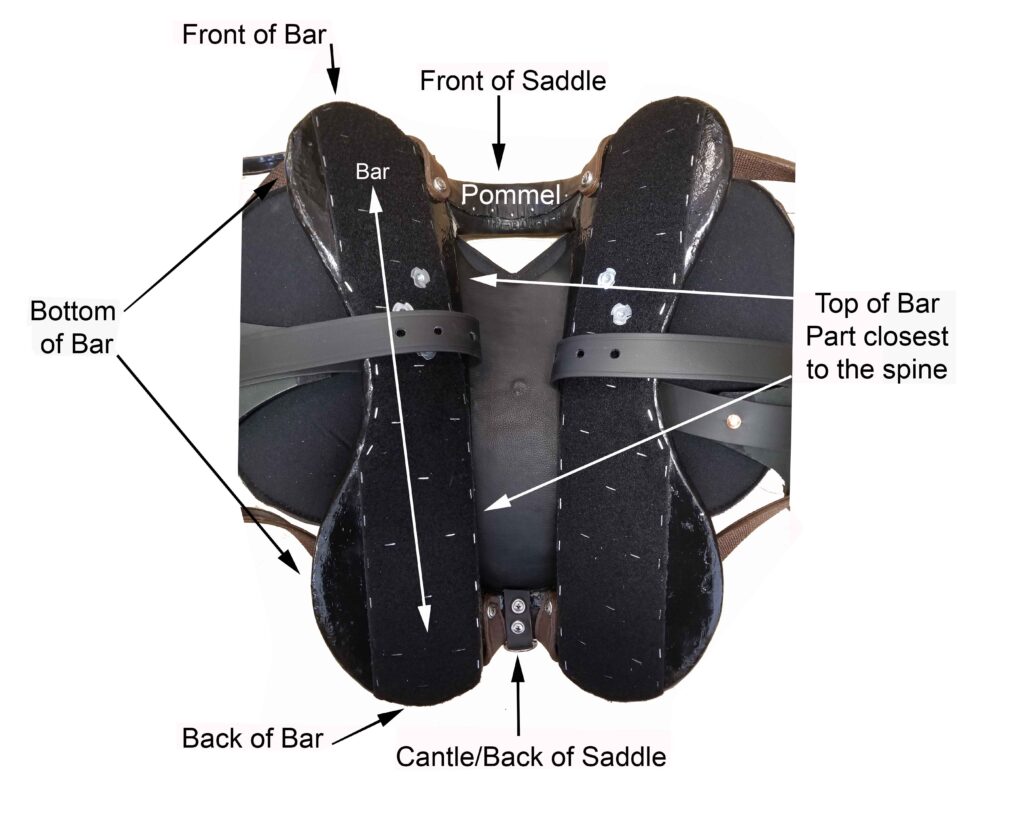
How to Measure a TW Saddle
If you want to measure a saddle yourself, here are the key parts to focus on:
Key Measuring Areas
Measure carefully and consistently. Older saddles may not match current tree specifications because saddle designs and measurements have changed over time.
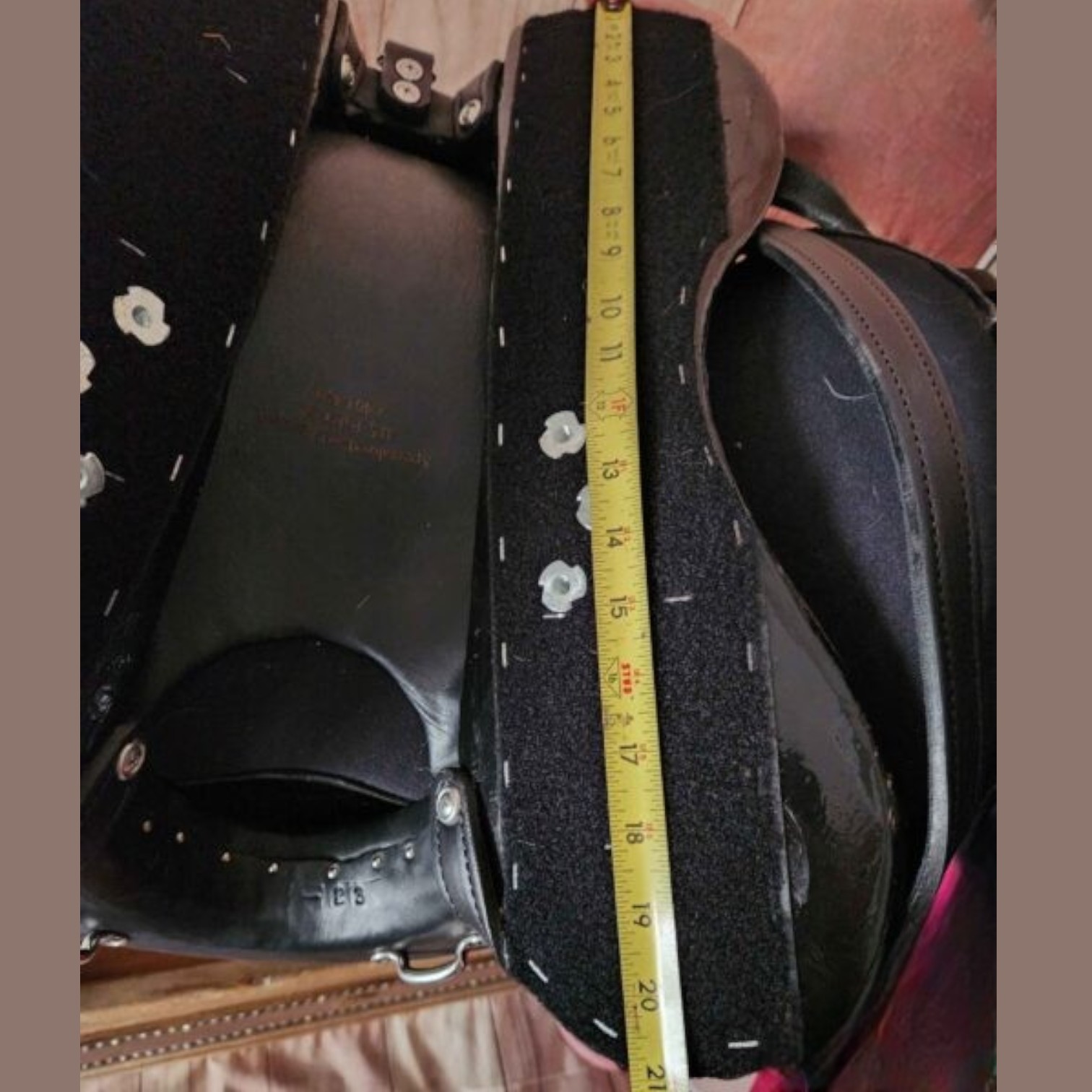
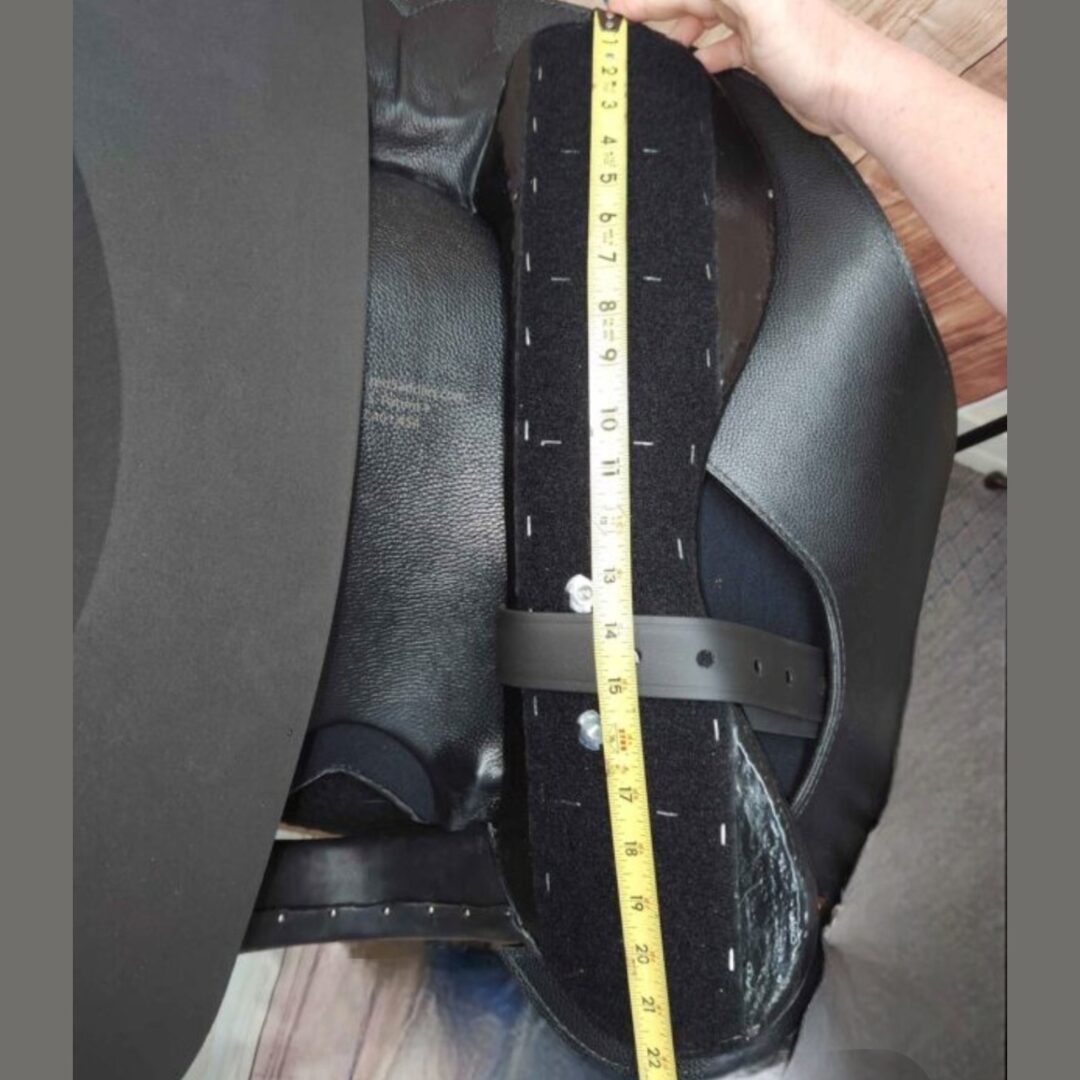
1. Bars
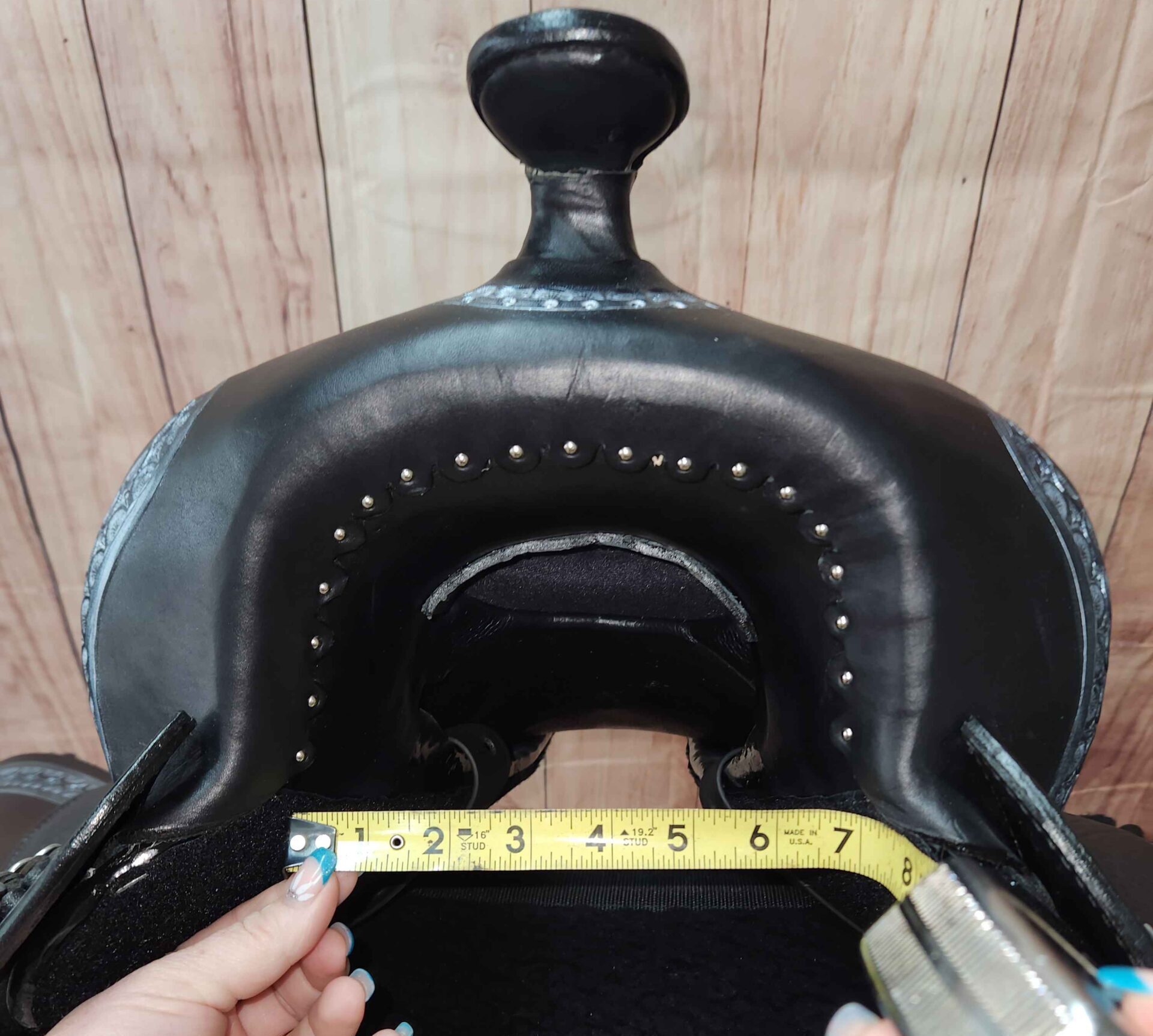
Flip the saddle over, remove any fitting cushions or fitting inserts, and measure the bars starting at the front near the gullet in the middle, extending straight back to the end of the bars in the middle.
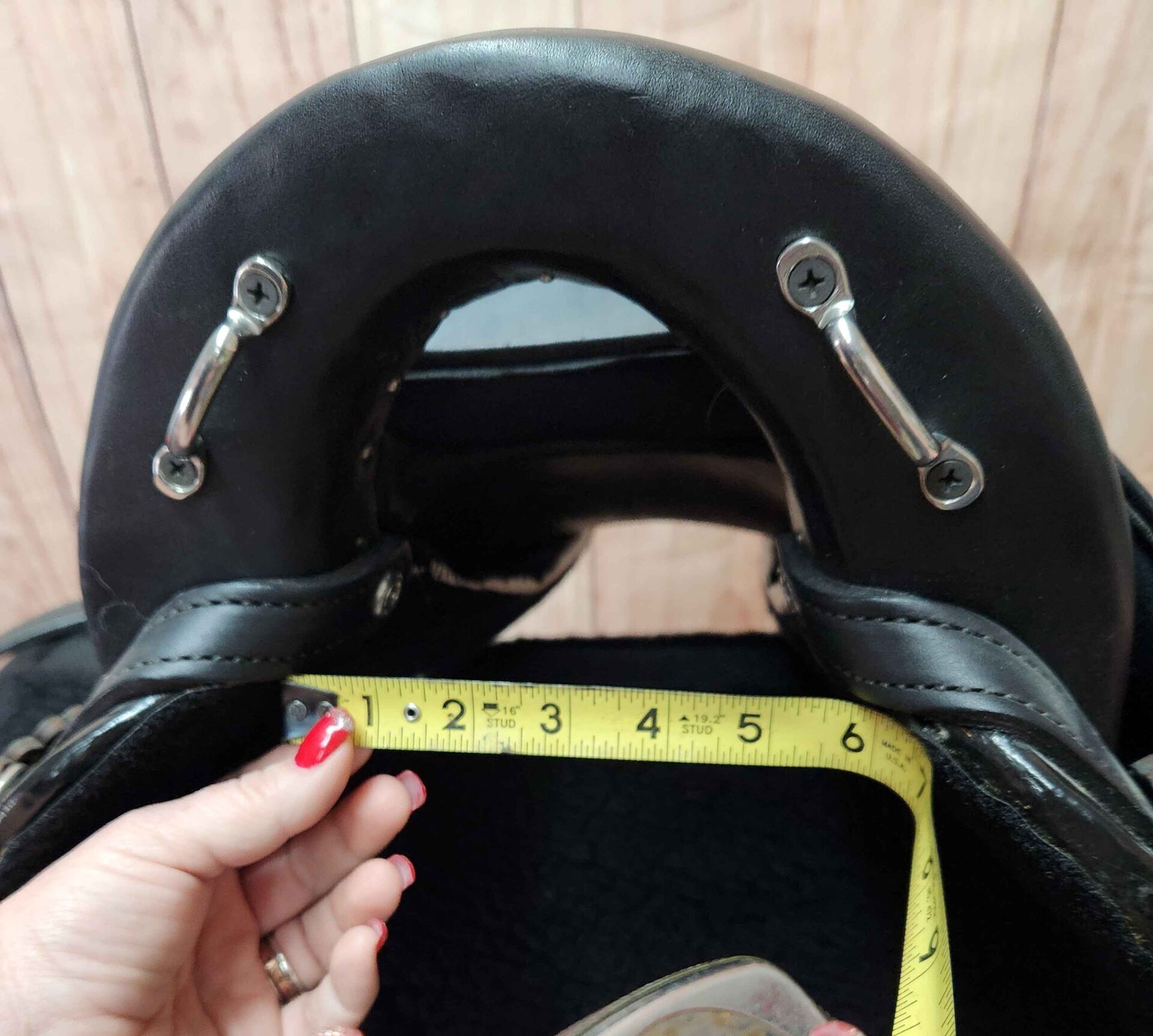
2. Gullet Width
To determine the gullet width, measure at the front of the saddle where the pommel ties into the bars. Currently, our standard tree has a 6” gullet and the wide tree has a 7” gullet.
Please note that over the 25+ years we’ve been in business, our tree specifications have evolved. Older saddles may not match today’s measurements, even if they were originally built as a standard or wide. Because of these changes, the only gullet measurements we can provide are based on our current tree models. We are unable to confirm exact widths on older saddles.
3. Seat Size
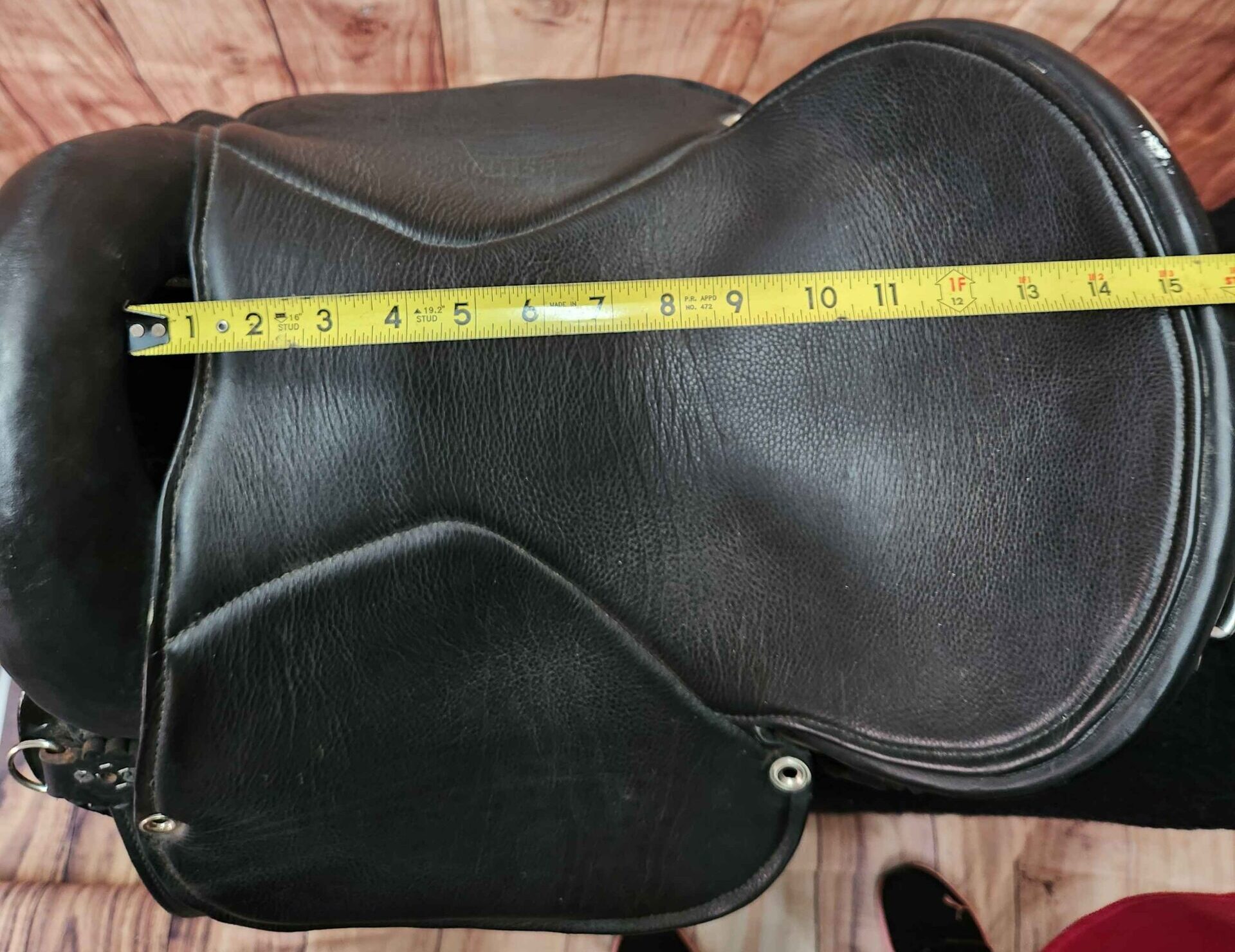
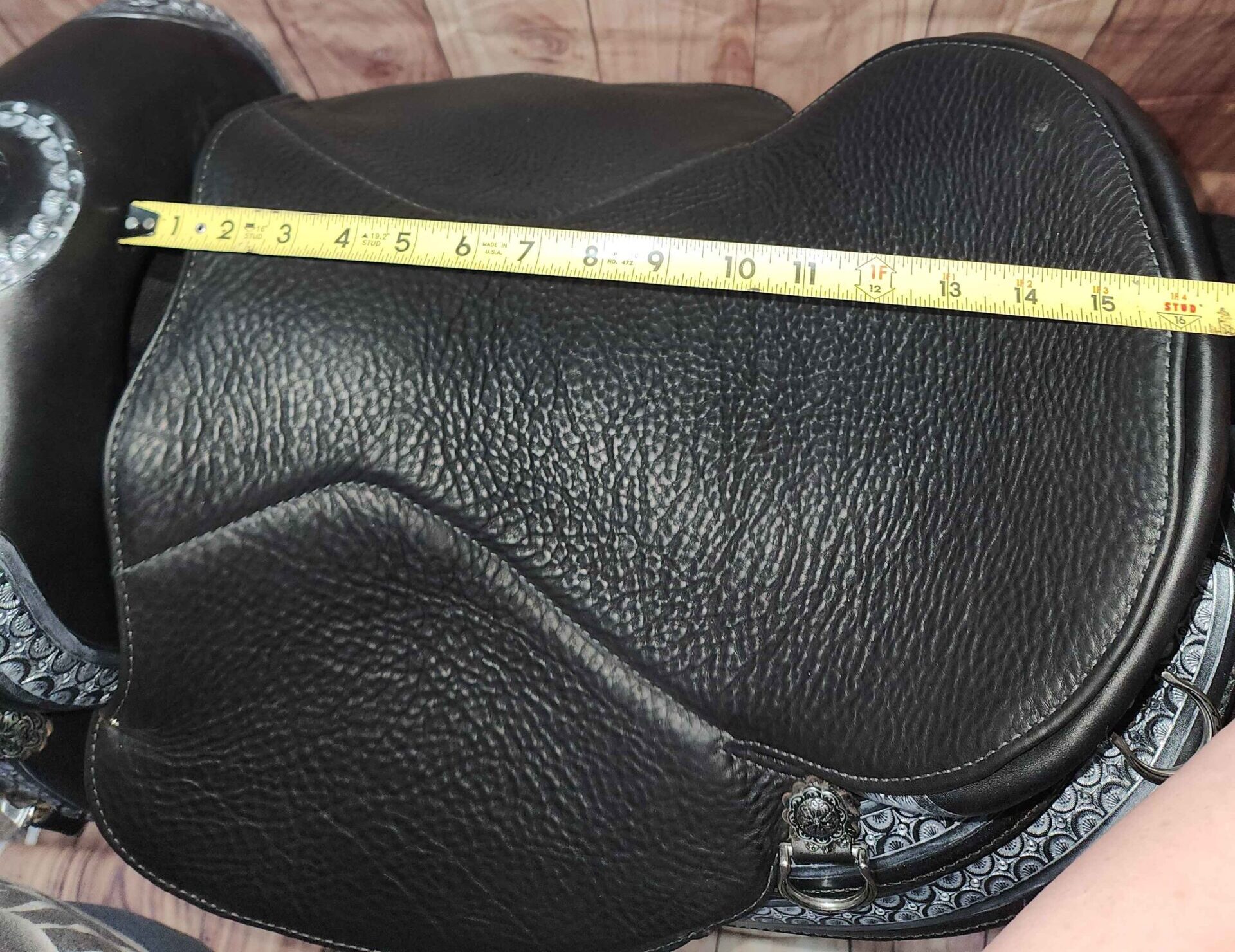
To measure the seat size, start at the inside edge of the pommel, where the seat meets the front rise — not the top of the pommel. Then measure in a straight line back to the inside edge of the cantle.
This measurement reflects the actual area where the rider sits and is how to determine seat size.
Be sure you’re measuring inside to inside, not over the top of the pommel or past the cantle. Measuring over the curves or using outside dimensions will result in inaccurate sizing.
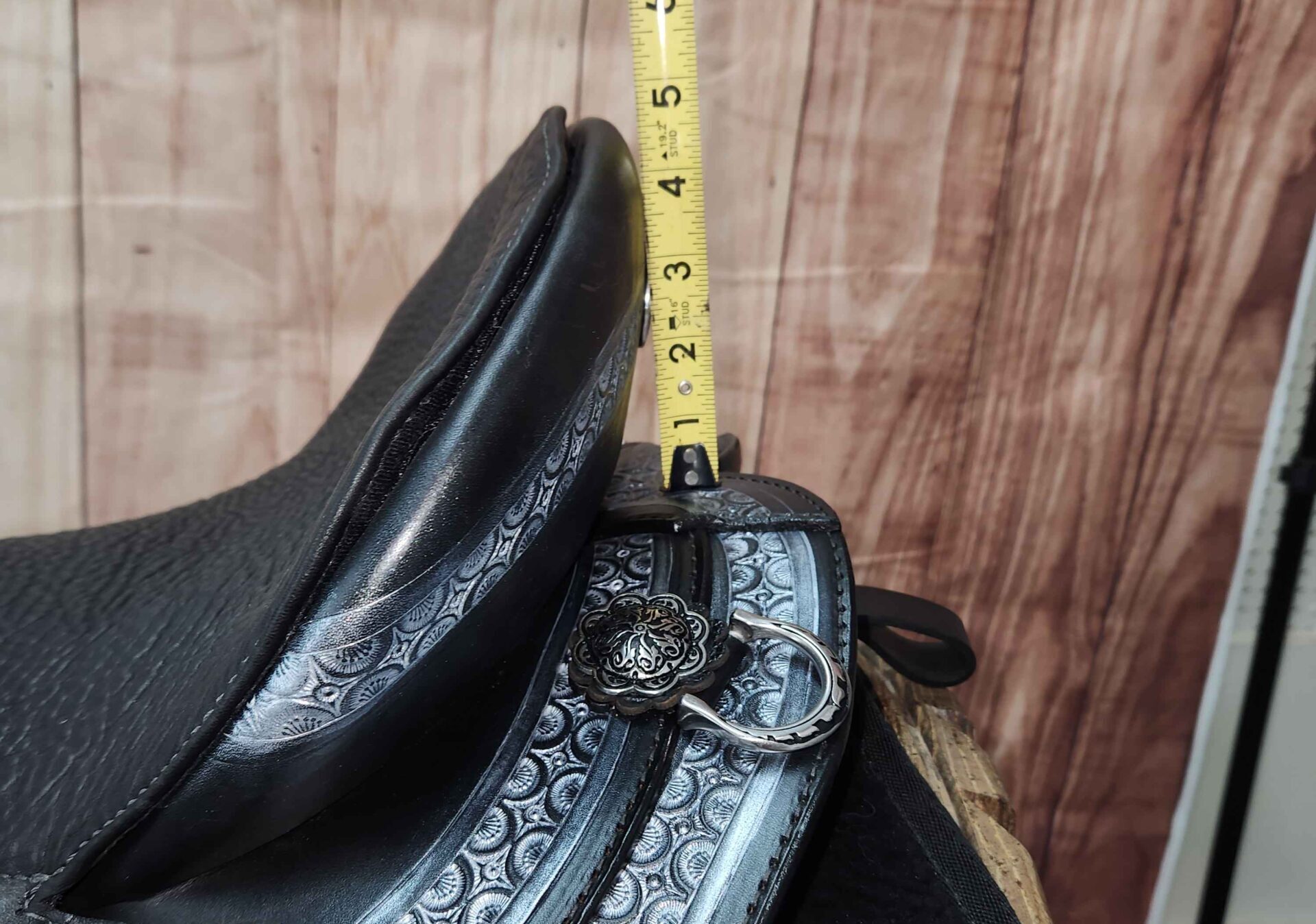
4. Cantle Height
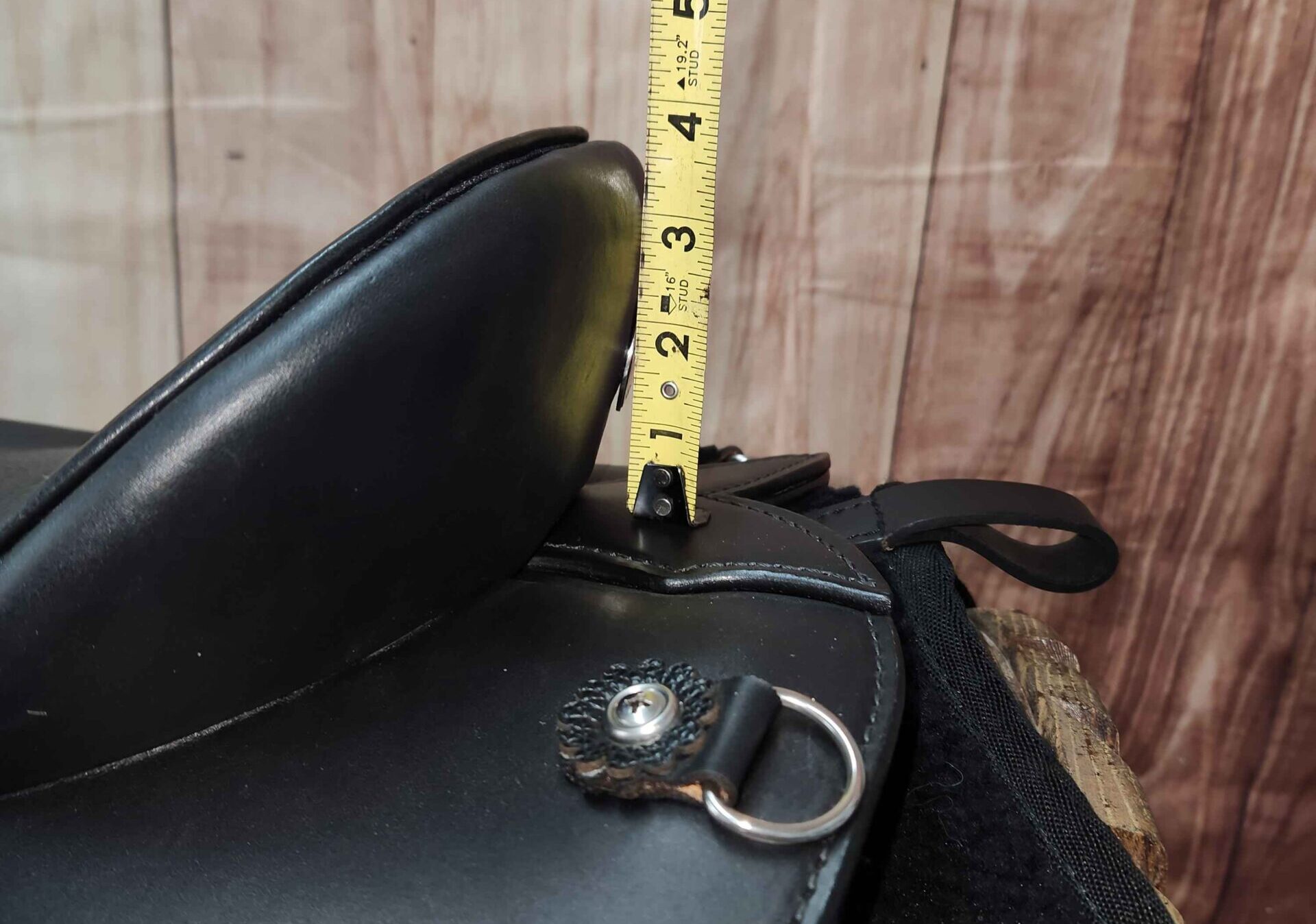
Most Specialized Saddles feature one of two cantle heights:
Short Cantle: Measures 3.5” on a saddle that has a skirt and 4” on an Ultralight model with no skirt.
Tall Cantle: Measures 4.5” on a saddle that has a skirt and 5” on an Ultralight model with no skirt.
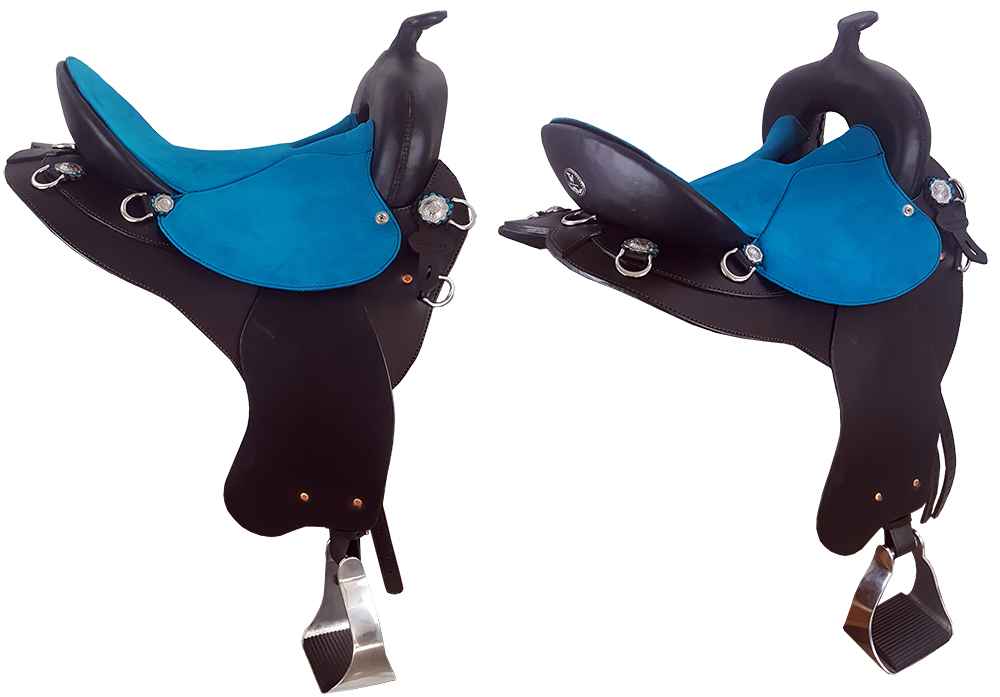
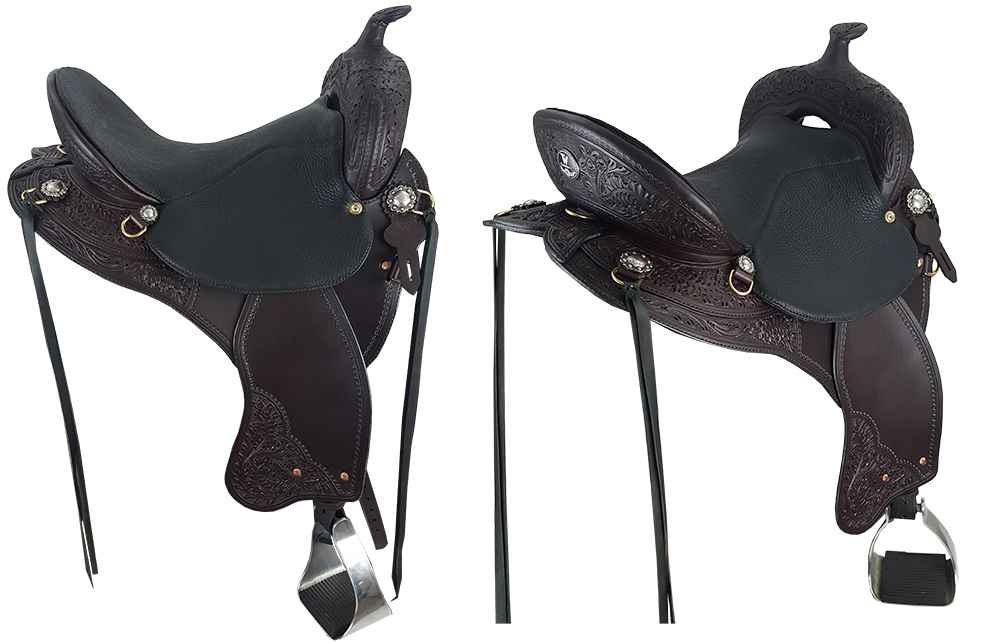
5. Seat Type
Most Specialized Saddles come with one of the following seat styles:
Trail Seat: A solid seat with no cut-out. It features a slight rise at the back, sloping upward toward the pommel.
Flat Seat: Features a cut-out near the front of the seat by the pommel, typically around 3” in length, though this may vary by production year. This seat has a lower rise and a flatter overall profile from front to back.
Note: Most Aussie-style saddles are built with the Aussie Seat, a hybrid between the Trail and Flat styles, and do not have a cut-out.
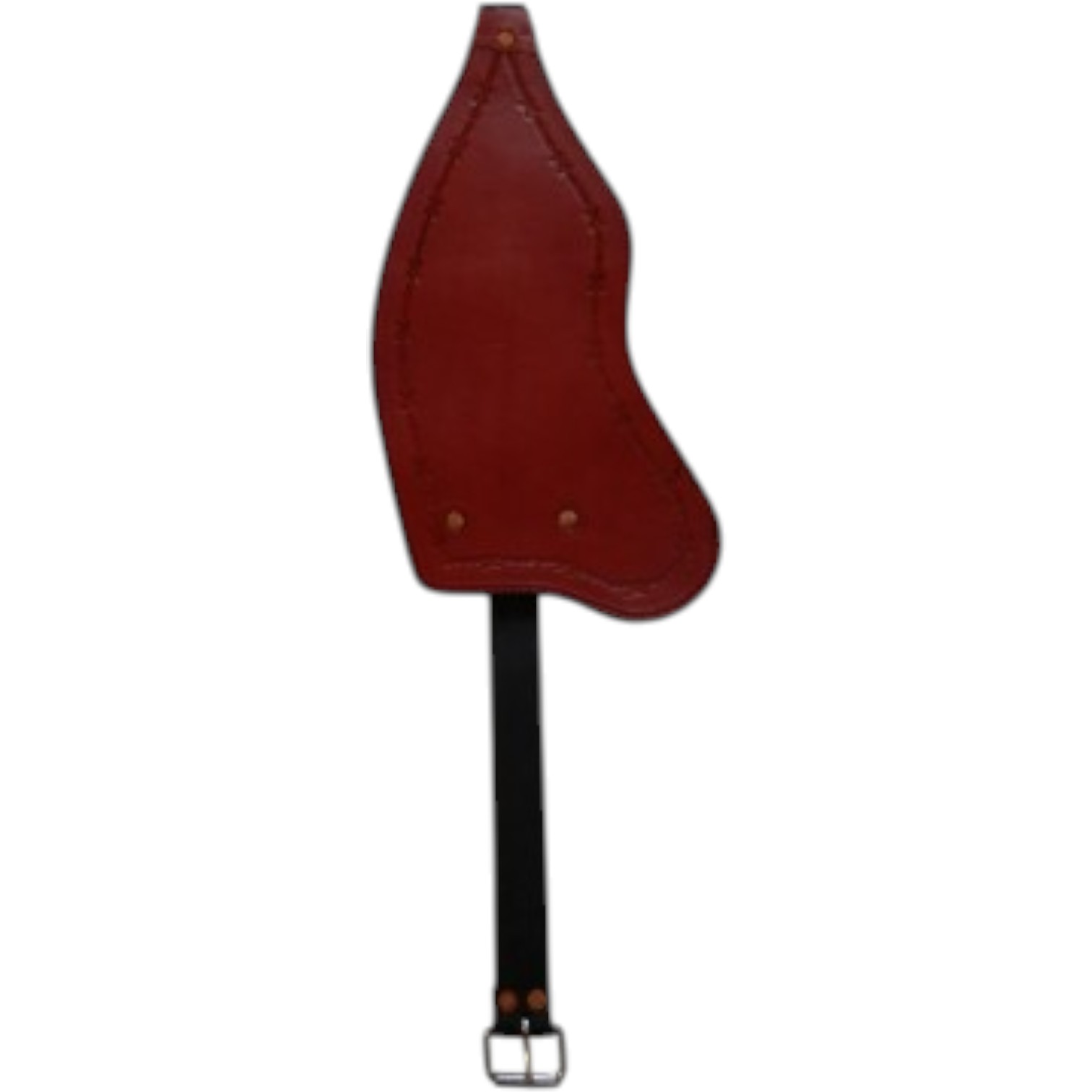
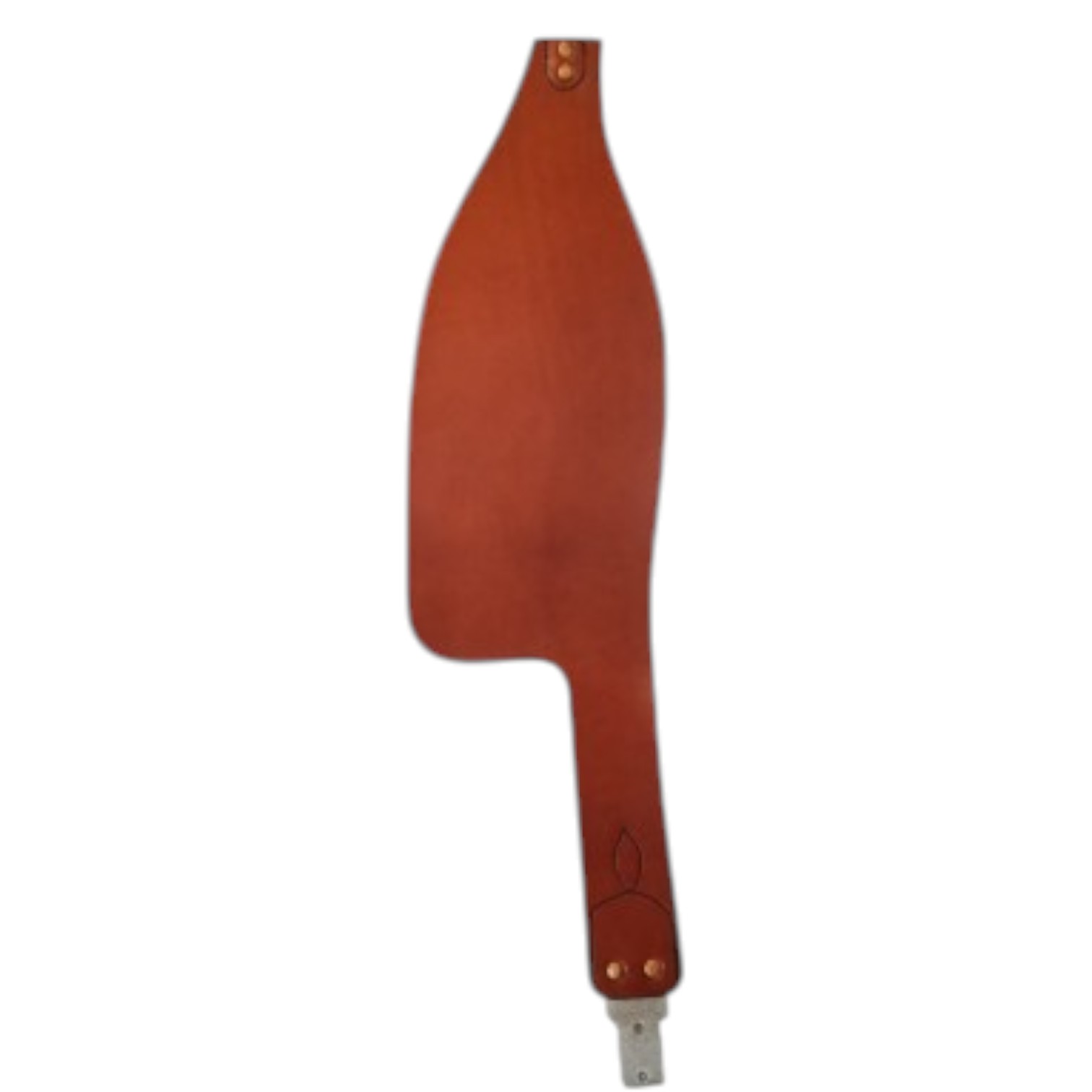
6. Fender Type
If the saddle you are looking at has fenders — some have stirrup leathers only — there are two fender styles:
Trail Fenders: Have a 1.5” Biothane neck that connects the fender to the stirrup and are adjusted with easy-to-use roller buckles.
Traditional Fenders: Have a 2.5” leather neck.
Need Help with a New Saddle?
If you’re interested in purchasing a new TW Saddle or need assistance with a saddle you purchased directly from us, please contact our team.